Psyllium Husk Grades Explained: 85%, 95%, 98% and 99% Purity
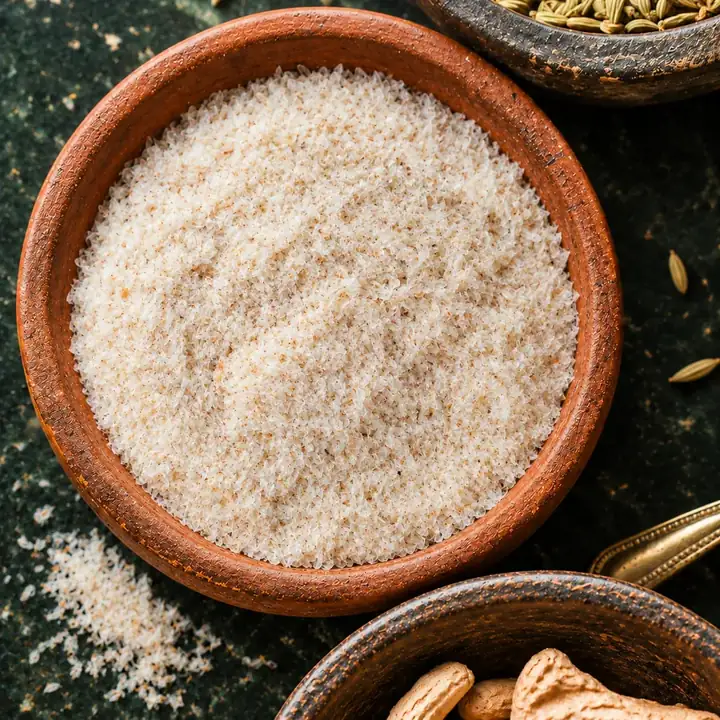
Psyllium husk is sold by purity — 99%, 98%, 95% or 85% — and the grade you choose affects price, swell performance and what your finished product can claim. Here is what the numbers actually mean.
What does "purity" mean for psyllium husk?
Psyllium husk is the seed coat of Plantago ovata. After the seed is cleaned and de-husked, the husk still contains some lighter and heavier foreign material: fine husk dust, broken seed, kernel particles and other plant matter. The purity percentage describes how much of the material is clean husk. A 99% grade has been sifted and aspirated more times, so it contains the least extraneous matter and looks whiter.
The main grades side by side
- 99% pure — super-white, lowest extraneous matter (around 1% max light extraneous matter) and the highest swell volume, typically 50 ml/g minimum. Chosen for pharmaceutical, nutraceutical and premium retail packs.
- 98% pure — the most widely traded export grade. White in colour, swell volume around 45 ml/g minimum, and a good balance between performance and price.
- 95% pure — pale buff colour, swell volume around 40 ml/g minimum. Used in food processing, bakery and blends where colour is less critical.
- 85% pure — an economical grade with more extraneous matter, mainly for animal feed and some industrial uses.
You can see our full grade-wise specification table on the psyllium husk product page.
Why swell volume matters
Swell volume measures how much one gram of husk expands in water, in millilitres. It is the best single indicator of how the husk will perform as a fibre or thickener. Higher purity generally means higher swell volume, because foreign matter does not swell. When comparing offers from different suppliers, always ask for swell volume on the certificate of analysis rather than comparing purity alone.
Whole husk vs husk powder
Psyllium husk powder is whole husk milled to a fixed particle size, called mesh. A higher mesh number means a finer powder: 30 or 40 mesh is a coarse powder, 60 mesh is fine, and finer grades are produced for capsule filling and instant drink mixes. Powder disperses faster in liquid but also gels faster, so the right mesh depends on your process. Powder is usually milled from 99%, 98% or 95% husk, so the purity of the starting husk still matters.
Moisture, ash and microbiology
Beyond purity, importers usually specify moisture (commonly 12% maximum), total ash and acid-insoluble ash (indicators of sand and soil), and microbiological limits such as total plate count, yeast and mould, and absence of E. coli and Salmonella. Buyers supplying pharmaceutical or EU retail markets often ask for steam-sterilised material to keep microbial counts low. Ethylene oxide treatment is not accepted in the EU, so steam sterilisation is the standard route.
Which grade should you buy?
- Pharma, supplements, premium retail: 99% or 98%, often steam sterilised.
- Food, bakery, gluten-free and keto products: 98% or 95% husk or powder.
- Animal feed and industrial: 95% or 85%.
Sourcing psyllium from India
India is the world's largest producer and exporter of psyllium, and most of the crop is processed around Unjha in North Gujarat. Holy Spices supplies whole husk and powder in all major grades, with a certificate of analysis for every lot. Send us your grade and quantity for a quotation and sample.
Frequently asked questions
Which psyllium husk grade is best?
For pharmaceutical and supplement use, 99% or 98% purity is usually preferred. For food and bakery, 98% or 95% works well, and 85% is mainly used for animal feed.
What is a good swell volume for psyllium husk?
Typical export specifications are around 50 ml/g minimum for 99% husk, 45 ml/g for 98% and 40 ml/g for 95%. Always confirm the value on the lot's certificate of analysis.
What mesh sizes are available for psyllium husk powder?
Common export sizes are 30, 40 and 60 mesh, with finer powder milled on request for capsules and instant drink mixes.