
Cumin Seeds Export Specifications for EU and USA Buyers
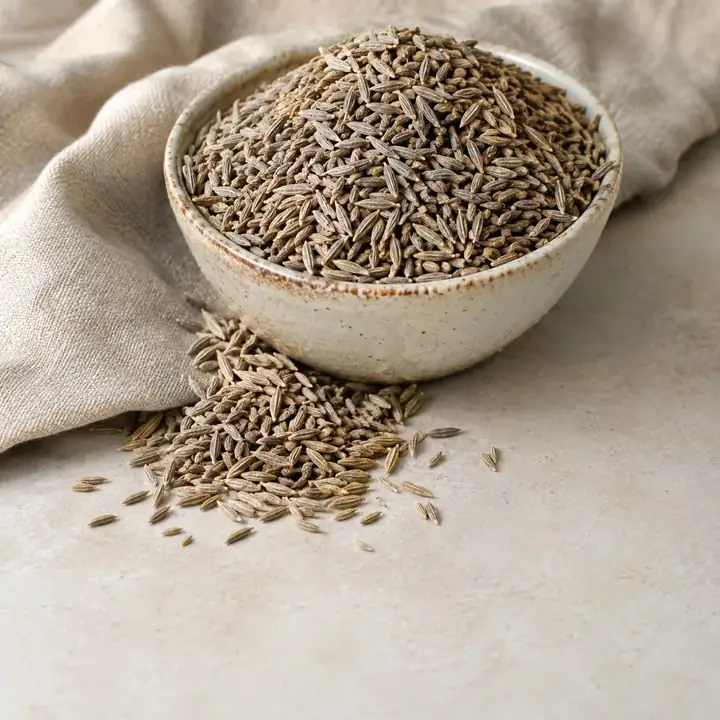
India is the world's largest producer and exporter of cumin seeds, but cumin that sells easily in one market can be rejected in another. These are the specifications European and American buyers look at most closely.
1. Purity and cleaning grade
Cumin is traded by purity — the share of clean seed after removing dust, stones, stems and other seeds. Machine-cleaned cumin is commonly offered at 98–99% purity, and Sortex-cleaned cumin at 99.5% or higher. Sortex (optical colour sorting) removes discoloured seed and foreign particles that mechanical cleaning misses, which is why most EU and US importers specify Sortex-cleaned cumin. Read more in our guide to Sortex vs machine-cleaned spices.
2. Moisture and volatile oil
Low moisture protects cumin from mould and weight loss in transit; export contracts typically set a maximum of around 7–8%. Volatile oil content is the measure of aroma and flavour strength. Buyers producing seasonings and extracts often specify a minimum volatile oil percentage, so ask for it on the certificate of analysis.
3. Aflatoxin and ochratoxin limits
Mycotoxins are one of the most common reasons spice consignments are stopped at EU borders. EU law sets maximum levels for aflatoxins in spices — for cumin these are 5 µg/kg for aflatoxin B1 and 10 µg/kg for total aflatoxins — along with limits for ochratoxin A. The USA applies its own FDA action levels and import controls. Good drying, clean storage and lot-wise lab testing before shipment are the only reliable way to stay within these limits.
4. Pesticide residues (MRLs)
The EU applies maximum residue levels (MRLs) for each pesticide, and many are set very low. US buyers check residues against EPA tolerances. Importers increasingly ask for a multi-residue pesticide report from an accredited laboratory for every shipment, so make this part of your contract.
5. Microbiology and ethylene oxide
Salmonella must be absent in the tested sample (commonly 25 g), and many buyers also set limits for total plate count, yeast and mould, and E. coli. The EU does not permit ethylene oxide (ETO) treatment of food, so where low microbial counts are needed, steam sterilisation is the accepted method.
6. Typical export specification
- Purity: 99% min (machine cleaned) · 99.5% min (Sortex)
- Moisture: max 7.0–8.0%
- Admixture: max 0.5–1.0%
- Salmonella / E. coli: absent in 25 g
- Aflatoxin: within EU and US FDA limits
- Shelf life: about 24 months in sealed packing
See the full specification on our cumin seeds page.
7. Documents EU and US buyers expect
Commercial invoice, packing list, bill of lading, certificate of origin, phytosanitary certificate and a certificate of analysis with purity, moisture, aflatoxin, pesticide and microbiological results. US shipments also require the shipper's FDA food facility registration and prior notice filed by the importer.
Holy Spices supplies machine-cleaned and Sortex-cleaned cumin from Gujarat and Rajasthan, lab tested lot by lot. Ask for a quote and sample.
Frequently asked questions
What purity of cumin do EU buyers need?
Most EU and US importers specify Sortex-cleaned cumin of 99.5% purity or higher, although 99% machine-cleaned cumin is also traded for some uses.
What are the EU aflatoxin limits for cumin?
EU maximum levels for spices such as cumin are 5 µg/kg for aflatoxin B1 and 10 µg/kg for total aflatoxins.
Is ethylene oxide allowed on spices for the EU?
No. Ethylene oxide treatment is not permitted for food sold in the EU; steam sterilisation is the accepted alternative for reducing microbial load.